
A non-contact sleep monitor measures you without anything on your body: no band, no ring, no patch. Some sit under the mattress, some on the wall or the nightstand, some point a camera at the bed, some listen through a phone. They read different things, in different ways. Here is how each works, and what to check before you buy.
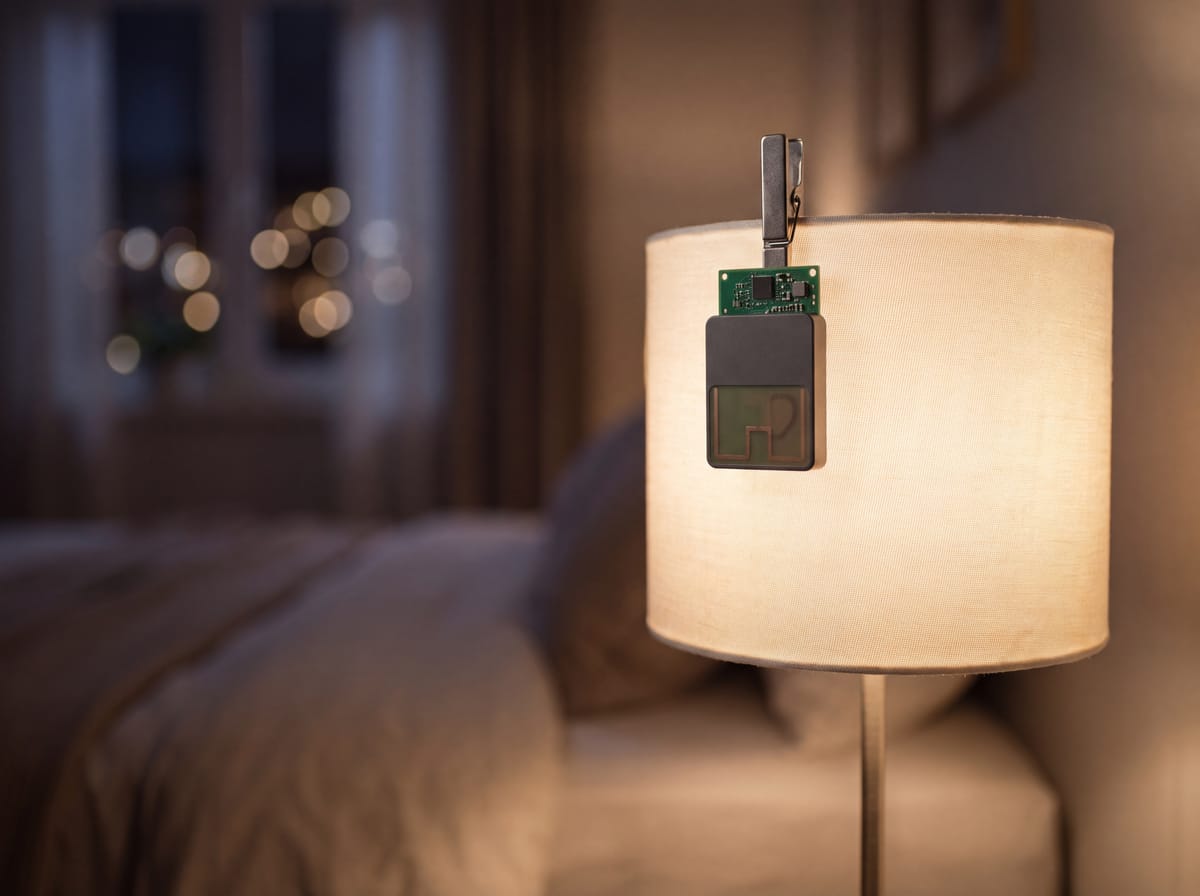
A low-power radio pulse bounces off the chest and comes back. The tiny movements of breathing and the heartbeat change the echo. Reads through bedding; no camera.
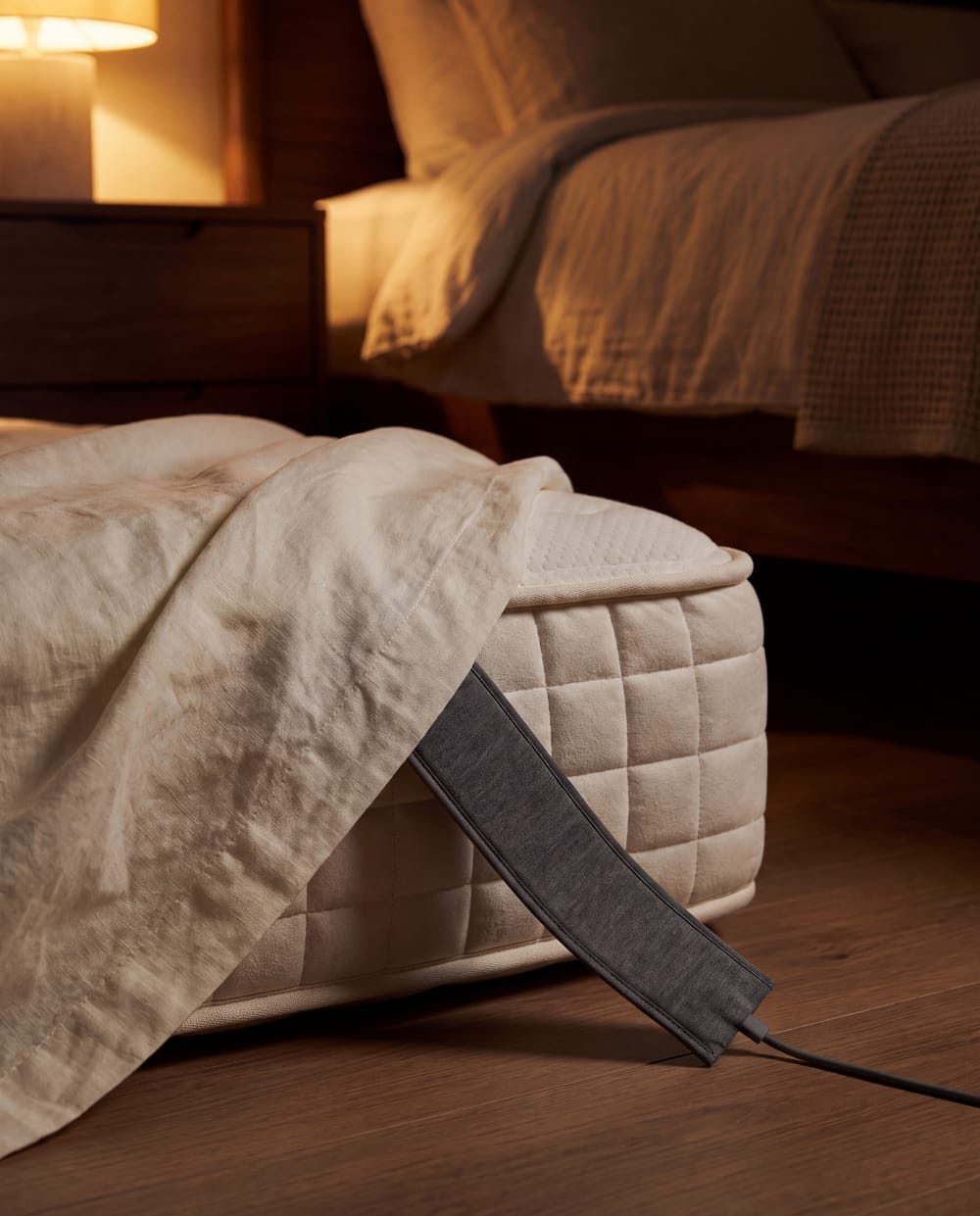
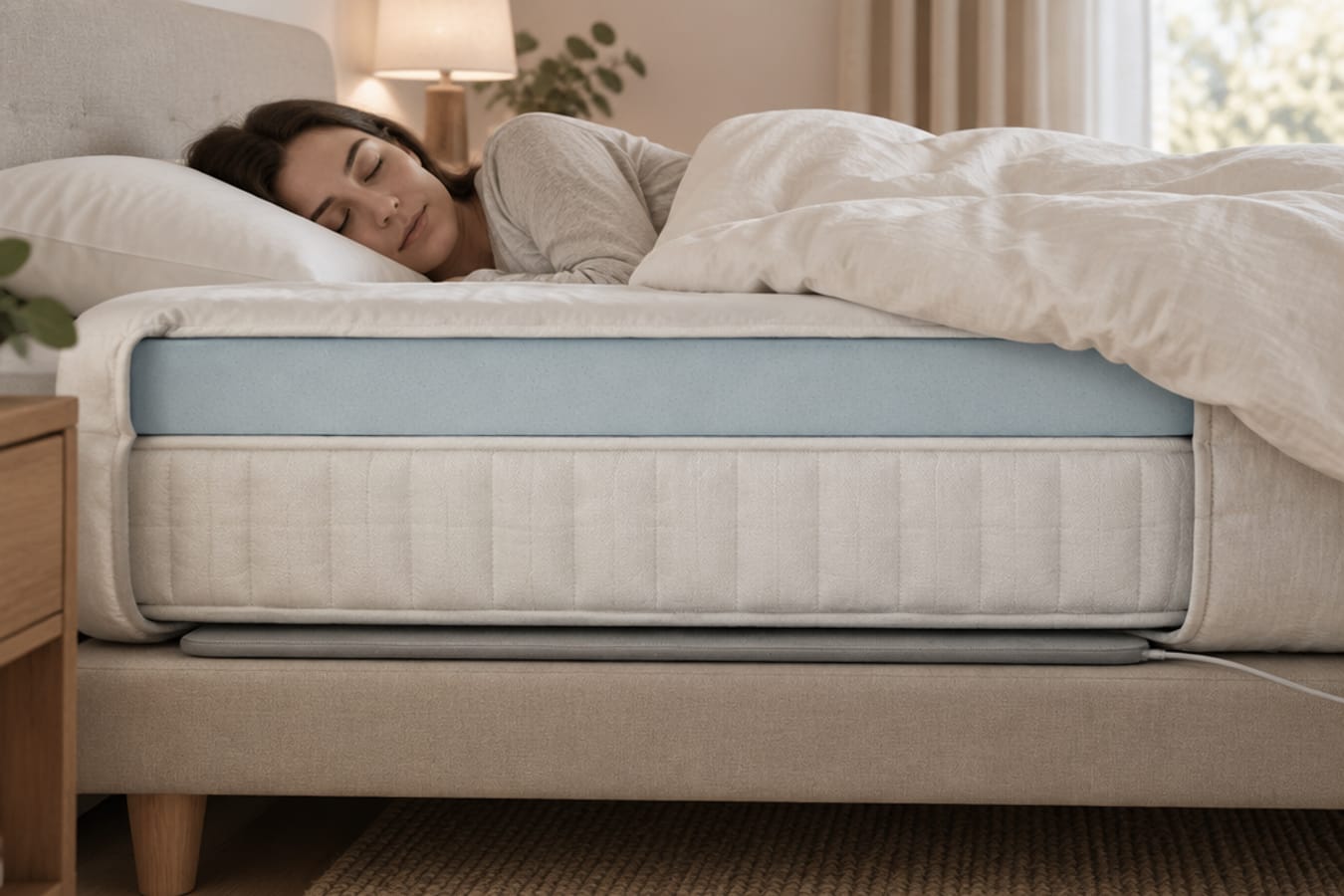
A strip under the mattress feels pressure and vibration from the body. Nothing visible; it reads through the mattress, so mattress type and a shared bed matter.
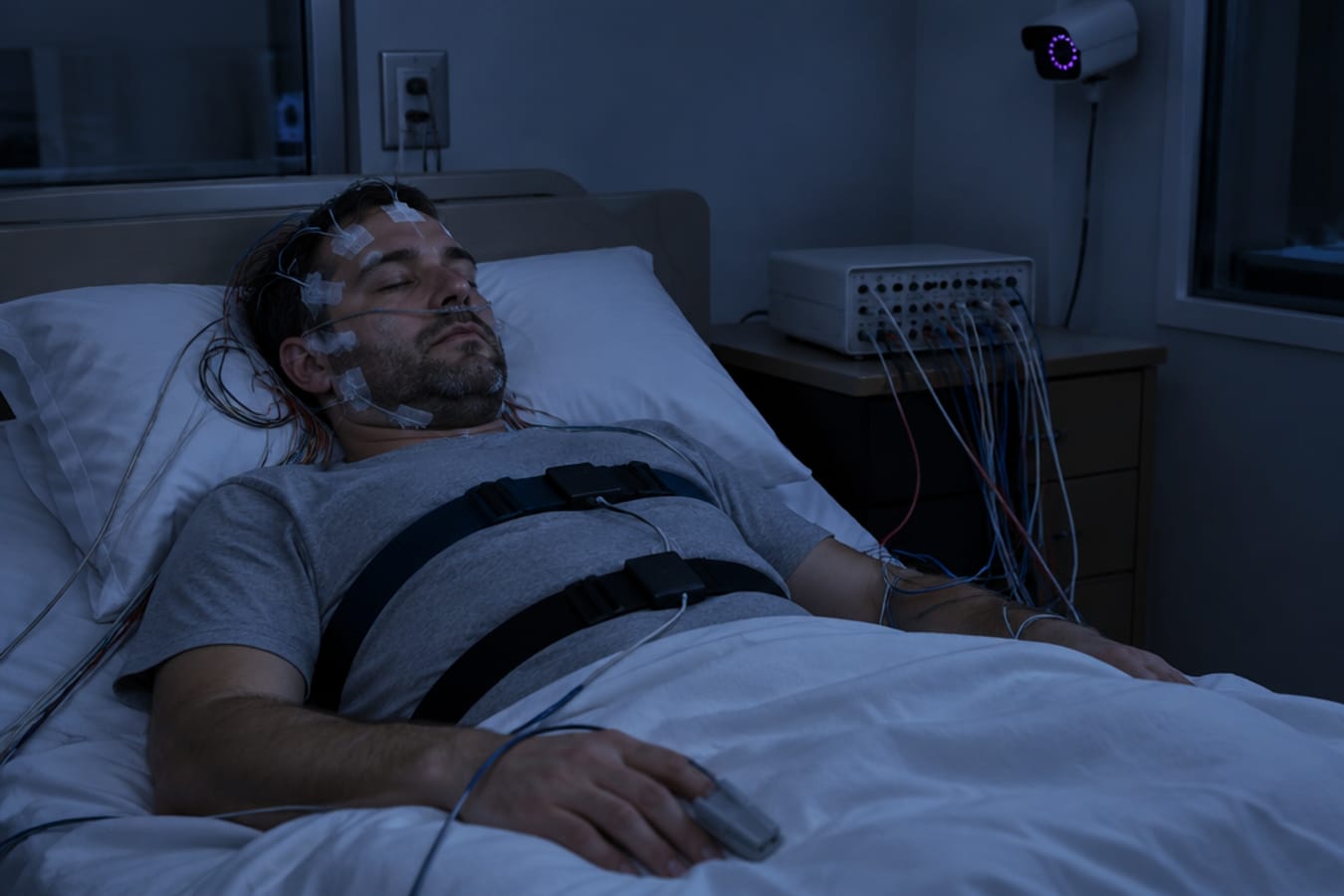
Not a home device, but the yardstick: many sensors on the body for one night, read by specialists. Home monitors are tested against references like this.
An infrared camera watches the bed and estimates movement and breathing from the picture. Popular for babies; many adults do not want one in the bedroom.
The phone on the nightstand listens for sound or feels movement through the mattress. Free to try; it reads the room more than the body.
| Bedside radar | Under-mattress pad | Camera monitor | Phone app | |
|---|---|---|---|---|
| How it senses | Radio echo from the chest wall. | Pressure and vibration through the mattress. | Infrared picture of the bed. | Microphone or motion sensor. |
| Heart rate and breathing | Read from chest movement. | Estimated from vibration. | Breathing estimated from the picture. | Usually not. |
| Through bedding | Yes, depending on the frequency. | Through the mattress. | Needs a view of the body. | Not applicable. |
| Privacy | No image, no sound. | No image, no sound. | Video of the bedroom. | Records sound. |
| Two in the bed | One sensor per side reads the closest person. | Can feel both sleepers. | Sees both. | Hears both. |
| Power | Plugged in. | Plugged in. | Plugged in. | The phone, charging by the bed. |
Not all radars are the same. Higher-frequency radar is more readily reflected by a duvet; the impulse radar Kardian uses, centred near 7.3 gigahertz, passes through bedding to the chest. How it works.
A general wellness product, no prescription. Resting heart rate, breathing and sleep from the wall, each night beside your usual, in the free XKare app. $299 with two years of Max. Kardian Somily.
A Class II medical device, FDA-cleared (510(k) K202464) for measuring heart rate and breathing rate in adults. Prescribed for remote patient monitoring. Remote patient monitoring.
In published research on the radar technology, breathing rate came within about one breath a minute of a physician's count, on average, across 33 patients (Scientific Reports, 2019). The accuracy studies.
Kardian Somily is a general wellness product. It is not a medical device, does not diagnose, and is not an alarm. Not the XK300 Essence and not equivalent to it.
A device that measures your sleep without touching you: nothing worn, nothing stuck on. Most are bedside radar sensors, under-mattress pads, camera monitors or phone apps.
It depends on the method and on what is being measured. Ask what the device reads directly, what it estimates, and against what it was tested. Published research on Kardian's radar technology found breathing rate within about one breath a minute of a physician's count, on average, across 33 patients (Scientific Reports, 2019).
Kardian's radar runs at more than a hundred times less power than the Wi-Fi router already in your home, and the technology has been used in hospitals and nursing homes since 2021.
Some can. Kardian's sensor reads the closest body, so two people use one sensor each, above each side of the bed. Pads and cameras may pick up both sleepers.
Not for Kardian Somily, which is a general wellness product. The XK300 Essence is a prescription device, supplied through a care provider or remote-monitoring programme.